
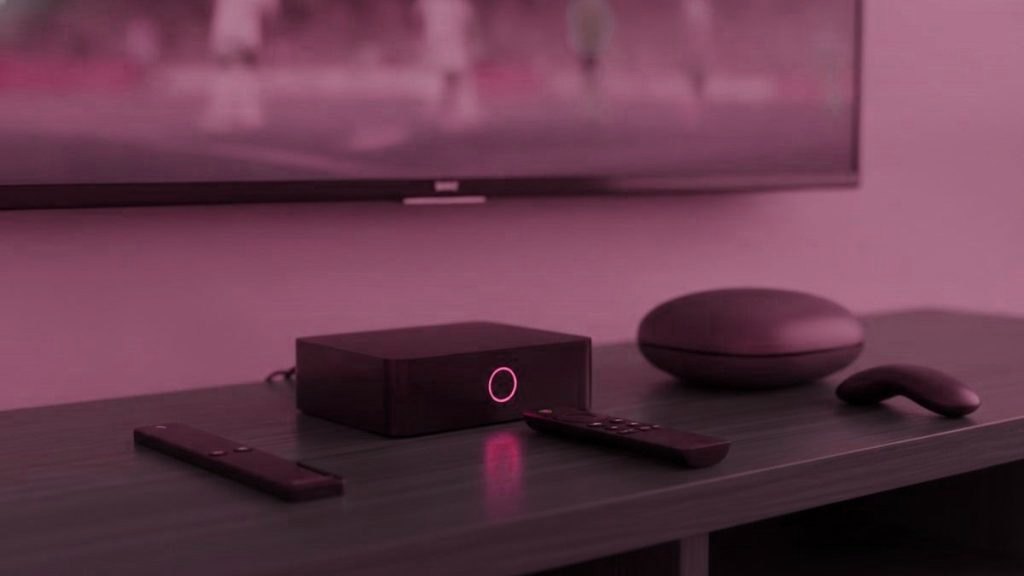
Here is the uncomfortable truth about IPTV boxes: hardly anyone needs one, and among the people who genuinely do, a $40 streaming stick beats a $180 dedicated unit almost every time. The most expensive error in this whole topic is buying the wrong device, and it is the error our support team spends the most hours unwinding — usually from someone who has already paid. So this guide runs backwards from the usual list. We start with the purchases people regret, then move to the ones worth making, because avoiding a bad buy saves more than any ranking ever will.
The short version
Look at the room before you reach for your wallet. If you do have to buy, a Fire TV Stick 4K or 4K Max at $30 to $50 is right for the vast majority. Go higher only for a living-room set you watch daily, or when you want a remote and guide that behave like a proper set-top box. And before any purchase, test the cheap network cable first.
The purchases people regret
Three buys account for most of the disappointment we see, and a single message before ordering would have prevented all three.
- A Roku, chosen because it is brilliant for Netflix. It is brilliant for that — and the wrong tool here, for the reasons set out below. It tops the list of devices people wish they had returned.
- A no-name box boasting eight cores and 8K support. Processor-core figures are a sales gimmick, almost no content exists in 8K, and anonymous boxes tend to run tampered software you cannot trust. A cheap listing crammed with big numbers is the oldest trap in the category.
- A premium enthusiast box for a rarely-used spare room. Fine hardware, squandered on a screen no one watches often. That budget would have covered a pair of sticks and a network adapter with change to spare.
None of this is obvious from a product listing, which is precisely why a quick question up front pays off. Describe your television and how your household watches, and the honest reply is usually “you already own what you need” or “the $40 stick is plenty” rather than the item sitting in your cart.
Do you even need a box if you own a smart TV?
Frequently the answer is no. Samsung and LG sets from 2016 onward install IPTV players straight from their own app stores — no extra gadget, no sideloading, and one fewer remote cluttering the coffee table. For plenty of homes that closes the question entirely, and bolting a box on top would only add cost and complexity for no gain. A separate device earns its place in two cases: when an older or sluggish smart TV has stopped receiving updates and now stutters through a big channel list, and when the set’s native app selection simply lacks a player you like. In both, the remedy is a $40 stick that brings a modern, maintained app to an aging panel — not a $180 unit. Check what your television already manages before assuming you need anything, since the trial runs perfectly well on the screen you own.
Take stock of what is already in the room
Before buying a thing, work through this list:
- A Samsung or LG set from 2016 or later loads players from its built-in store. Nothing else required.
- A Fire TV Stick or Android TV device you already own is ready to go the moment you add a player.
- A phone, tablet or laptop is the perfect way to trial the service before committing to hardware.
- An Apple TV installs IPTV Smarters Player from the tvOS store.
Run the free trial on whatever is to hand first. Prove the service is worth keeping before you decide what to play it on, not the reverse.
The devices, ranked for IPTV
| Device | Price | Runs TiViMate? | Our take |
|---|---|---|---|
| Fire TV Stick 4K / 4K Max | $30 – $50 | Yes, via sideload | What most homes should buy |
| Chromecast / Google TV Streamer | $40 – $50 | Yes, from the Play Store | Installs without sideloading |
| Generic Android box | $40 – $90 | Usually | Inconsistent; hold out for 2 GB RAM or more |
| Nvidia Shield | $150 – $200 | Yes | The most powerful, and more than most need |
| Formuler Z11 | $140 – $180 | Yes, and MyTVOnline | For the dedicated daily viewer |
| MAG 5xx | $120 – $160 | No, portal-based | Behaves like the cable box it replaces |
| Roku | $30 – $100 | No | Not suited to IPTV |
Fire TV Stick 4K Max: the sensible default
For less than a single cable bill you get untroubled 4K playback, and Amazon drops the price repeatedly across the year. The lone catch is that Amazon’s own store does not list TiViMate, so you add it through the Downloader app — a five-minute detour that our Firestick guide walks through menu by menu. Steer clear of the cheaper non-4K Lite unless money is genuinely tight: it stops at 1080p, which throws away the Ultra HD feeds you are paying to receive.
Formuler and MAG: what the extra outlay buys
The premium units will not sharpen the picture in any way you can see. What they deliver is a different feel:
A proper remote. Real buttons mapped to the channel list, the guide and favorites, instead of streaming controls bent to the task. On a screen you use every evening, that beats any spec on the box.
Nothing to sideload, ever. A MAG works off a portal bound to the unit, so there is no app to install or keep updated. Some people just want it to act like the cable box it replaced.
A quicker guide. Purpose-built silicon paints a long channel grid faster than a stick handling the same load. Set against that, you are paying several times the cost of a stick. Justified in the main room, wasteful in a bedroom. Both are covered in our MAG and Formuler guide.
Nvidia Shield, Google TV and the others
The Nvidia Shield is the quickest Android streamer on the market and will chew through anything, but for IPTV alone it is far more machine than most rooms call for — buy it if you also game or host a home media library. A Chromecast with Google TV, or the newer Google TV Streamer, is the neat middle path: TiViMate comes straight from the Play Store with no sideloading, which some people prefer to the Firestick routine. Every one of these does the job; none of them wins on value against the humble stick.
Why Roku is the wrong pick
Roku’s hardware is genuinely first-rate for ordinary streaming, so assuming it will cope with IPTV is a fair guess — and a mistaken one. The platform blocks sideloading, and its channel store stocks almost none of the serious players; TiViMate is nowhere to be found. You are left with a sparse set of options plus screen mirroring, which functions but is a miserable way to watch every day. Already own a Roku? Our Roku guide explains the two methods that do work. Shopping fresh? Put your money elsewhere.
If you go for a generic Android box, demand these
- 2 GB of memory at the very least, 4 GB if you can. Anything less and long channel lists grind.
- Genuine certified Android TV, not a repackaged phone build, so the Play Store serves proper TV apps.
- A wired network socket. For live streams, a cable outperforms Wi-Fi reliably.
- A recognized brand. Nameless boxes routinely arrive with altered firmware of murky origin.
- Pay no attention to core counts. Four quick cores beat eight slow ones, and listings love to blur that.
The right device for your situation
Instead of a single champion, match the hardware to the way you will use it:
- Trialing, or watching on the move: your phone or tablet. No purchase, and the fastest way to confirm the service is a keeper.
- A second TV, or the whole house: one Fire TV Stick 4K per screen. Two sticks and an adapter still undercut a single enthusiast box, and every screen behaves the same.
- A main living-room TV watched daily: a Formuler Z11 or a MAG, for the tailored remote and set-top feel. This is the one room where the premium earns its keep.
- A less tech-confident viewer, such as a parent or grandparent: a MAG. The portal approach means nothing to update or sideload, and the remote maps to channels the way a cable box always did.
- Someone who games or runs a media server too: the Nvidia Shield, which handles all of it. Buy it for those jobs, not for streaming by itself.
If none of these clearly describes you, that is exactly when a short message to support earns its keep — lay out the room and your habits, and the answer usually costs nothing at all.
Getting a new box running in minutes
Whatever you buy, the first-run routine is brief and much the same across devices:
- Plug it into power and the TV, and into the network by cable if there is a socket.
- Sign in to the device (an Amazon or Google account for a stick; a MAG needs only its portal, no account).
- Add the right player — from the store on a Google TV device, or through Downloader on a Firestick.
- Enter your GofluxTV login, let the guide fill in, and pin your favorite channels.
On a stick this is a five-minute task with the Firestick guide beside you; on a MAG it is quicker still. If a step does not match your screen, ask before restarting from scratch — the gap is nearly always a single menu.
How long a box keeps going
A decent box is a purchase you keep for years, which is one more reason not to overpay for the wrong one. A Fire TV Stick 4K Max or a certified Android TV box will go on receiving app updates for a long time, and the players are kept current by their developers. The devices that age poorly are the bargain no-name boxes running a locked, tampered Android build — updates dry up almost at once and they turn slow and insecure. When a box finally begins to labor, it is usually a low-memory model choking on a channel list that has swelled, which is the practical argument for insisting on 2 GB or more from the start rather than replacing it inside a year.
The $12 fix that outperforms a new box
When buffering is the grievance, a new box is usually the wrong answer. A cheap wired-network adapter clears more streaming trouble than any device, because most stutter is a network fault rather than a shortage of processing power. A wireless signal late in the evening, in a room far from the router, with half the street streaming, is exactly where live television buckles — and no chip on earth untangles a congested Wi-Fi channel. Try the cable before you drop $180 on a box destined to hit the very same ceiling.
What we would buy, and the message that spares you a return
To begin with, nothing. Trial it on what you own. After that, a Fire TV Stick 4K Max, plus a network adapter if the TV is old or slow — roughly $50, and it settles the large majority of cases. A Formuler or MAG only for a main television watched every day. Not sure which of those is you? That is a one-message question worth asking before you order rather than after: our support is on WhatsApp around the clock, and “which box suits my setup” is among the cheapest questions you will ever send. All of these pair with a GofluxTV account, delivered as a standard Xtream Codes login. Step-by-step help for every device lives in the setup hub, and the numbers are on the pricing page.
Frequently asked questions
What is the best IPTV box for most people?
A Fire TV Stick 4K or 4K Max, at $30 to $50. It handles 4K, costs less than a month of cable, and is discounted often. Daily viewers on a main television may prefer a Formuler Z11 or a MAG for the remote and guide feel.
Do I need to buy a box if I have a smart TV?
Often no. A Samsung or LG TV from 2016 on runs players from its own store with no extra hardware. A stick only helps if the set is old and slow, or its app store lacks a player you like. Test on what you own first.
Why should I avoid Roku for IPTV?
Roku allows no sideloading and its store carries almost none of the established players; TiViMate is absent entirely. It is excellent for mainstream streaming but a poor daily IPTV experience. If you already own one there are two working methods, but do not buy one for IPTV.
What should I look for in a generic Android box?
At least 2 GB of RAM (ideally 4), certified Android TV rather than a phone build, an Ethernet port, and a named brand. Ignore core counts, which mislead. Unbranded boxes often ship modified firmware and stop getting updates quickly.
Will a more expensive box give a better picture?
No. Picture quality comes from the feed and your connection, not the box. What premium boxes like Formuler and MAG buy is a purpose-built remote, a faster guide and no sideloading, which is worth it on a main TV and wasted in a spare room.
My IPTV keeps buffering. Should I buy a faster box?
Usually not. Most buffering is a network problem, so a $12 Ethernet adapter fixes more than any box. Wi-Fi in a room far from the router at peak time is where live TV falls apart. Try the cable before spending on hardware, or ask support first.
Ready to watch 25,000+ channels?
Message the team on WhatsApp, get your login in under 15 minutes, and we set it up with you. 7-day money-back guarantee.
Related articles
Which IPTV App Should You Use? Start From Your Device
There is no single best IPTV app, only the best one for your device. Here are the players for the Firestick, Samsung…
September 2, 2026What IPTV Really Costs in 2026, and the Price Nobody Prints
IPTV costs about $15 for a month and $69 for a year on one device, which is $5 to $7 a month.…
August 31, 2026IPTV and US Law: Two Questions Behind One Anxious Search
IPTV technology is legal in the United States. What can be illegal is a provider distributing channels it has not licensed, and…